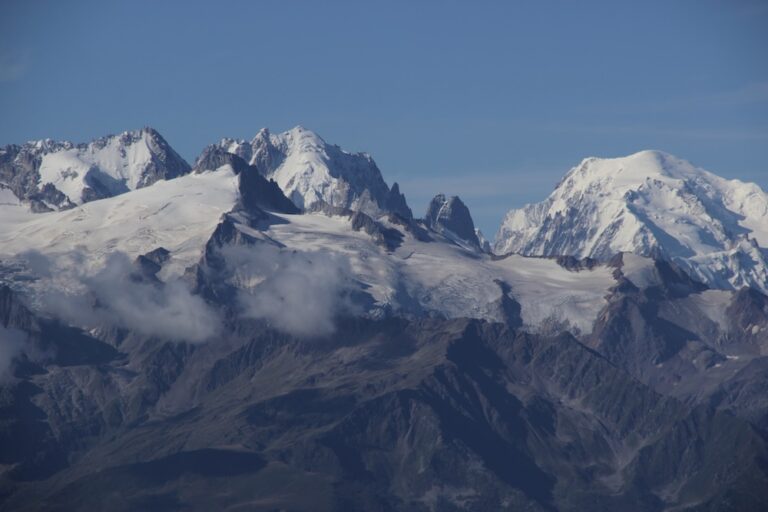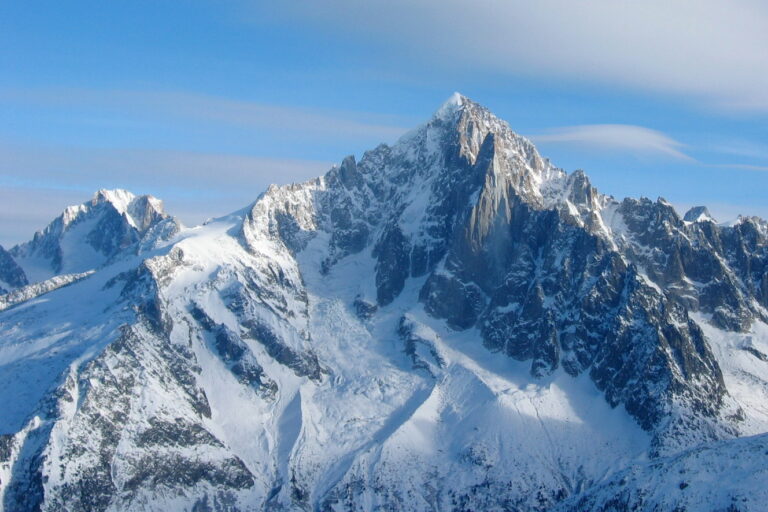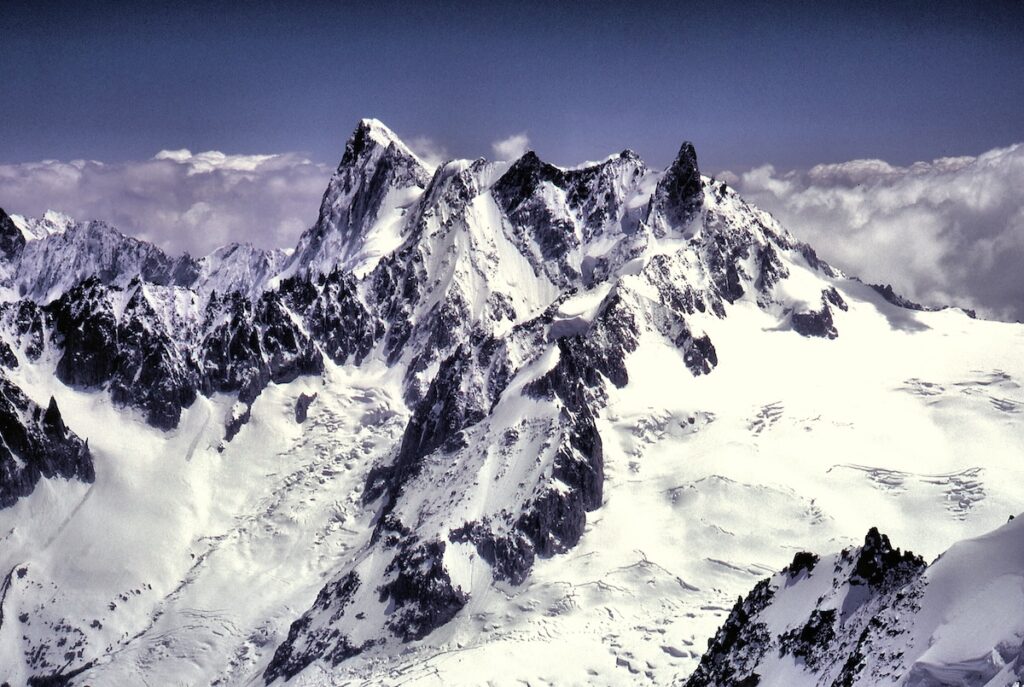
Rising sharply from the border of France and Italy, Les Grandes Jorasses dominate the silhouette of the Mont Blanc massif. Their sheer north face, an almost kilometre‑wide wall of granite and ice, has haunted and inspired alpinists since the late 19th century. Whether you are a seasoned ice‑climber eyeing the famed Walker Spur, a summer trekker dreaming of the ridge traverse, or a curious traveller seeking the best viewpoint from the Aiguille du Midi, the mountain offers a palette of challenges and panoramas that few peaks can match. The blend of rugged ridges, lingering glaciers, and historic bivouacs makes the Grandes Jorasses a living museum of Alpine climbing, a destination where every crack, cornice and ridge tells a story.
Beyond the rock, the surrounding valley brims with high‑altitude culture: the Boccalatte hut perched on the glacier, the Leschaux hut guarding the French side, and the network of cable‑car lifts that whisk adventurers from Chamonix to the summit ridge. In the following sections we will dissect the mountain’s geography, peel back the layers of its most celebrated routes – from the legendary north face to the quieter west ridge – and hand‑pick practical advice for anyone planning a visit. Grab your crampons, fire up the GPS, and let’s dive into the world of Grandes Jorasses climbing.
Table of Contents
Overview: geography, history and why the mountain matters
The Grandes Jorasses sit at 4 208 m, making them one of the Alpine four‑thousanders that crown the Graian Alps. Their summit marks the border between France (Haute‑Savoie) and Italy (Aosta Valley), and the massif is part of the larger Mont Blanc massif that dominates the region. The peak’s name, meaning “big jaws,” reflects the massive, tooth‑like ridge that splits the mountain into several distinct points: Pointe Walker, Pointe Croz, Pointe Whymper, Pointe Hélène, Pointe Marguerite and Pointe Young. Each point offers a different angle on the mountain’s grand façade, and together they create a dramatic skyline that can be seen from the valley below.
The first successful ascent was recorded in 1868 via the south‑west ridge, a route that today is considered a classic alpine climb. Since then, the mountain has hosted a litany of first ascents, including the legendary north‑face “Walker Spur” in 1938 and the more recent “Croz Spur” which opened a new line on the east face. Each route has contributed to the mountain’s mythos, cementing its place among the three great north faces of the Alps together with the Eiger and the Matterhorn.
Iconic north face and legendary routes
The Walker Spur – a rite of passage
The Walker spur (also called Pointe Walker route) remains the most iconic line on the North face. First conquered by a party led by John Walker in 1938, the route follows a striking ridge that climbs over mixed rock and ice for roughly 1 200 m. Climbers encounter sections of hard granite up to UIAA VI (5.9) and steep ice at 60‑70°. The route is typically tackled in two to three days, with bivouac spots on small ledges or in a high‑altitude tent near the glacier that feeds the summit. The difficulty is not in extreme technical moves but in the exposure and the length – a sudden weather change can turn a simple bivouac into a race against time.
Key highlights:
- Length: ~1 200 m of vertical gain
- Typical grading: AD+/D (mixed)
- Major cruxes: the “Ice Roof” and the final “Scree Stair” to the summit
- Best season: late June to early September
Croz Spur – the newer east‑face masterpiece
Opened in the 1990s, the Croz spur (leading to Pointe Croz) provides a slightly less congested alternative to the Walker. It climbs the east ridge, a line that alternates between steep rock bands and hard ice flutings. The route is graded around D‑, demanding precise footwork on dry stone and swift transitions on icy slabs. Because the spur is less travelled, climbers enjoy a quieter approach, though the difficulty remains high enough to keep the experience “serious”.
Both the Walker and Croz spurs share the same summit block, a dramatic, corniced platform that offers a 360° view of the Alps. From here, the Mont Blanc massif looms to the west, while the Aiguille du Midi and the Hautes‑Frédéguer glacier spread to the south.
Other noteworthy routes
For those seeking a less technical but still rewarding experience, the West ridge (often called the “Normal Route”) provides a moderate ascent that skirts the western flank of the mountain. The route is graded F/PD, suitable for confident hikers equipped with crampons and a rope. The Cassin route, a classic path on the south‑west aspect, offers a mix of snow and rock, making it a solid choice for early summer when the upper snowfields are still stable.
| Route | Difficulty | Typical Duration |
|---|---|---|
| Walker Spur (North face) | AD+/D | 2‑3 days |
| Croz Spur (East face) | D‑ | 2‑3 days |
| West Ridge (Normal) | F/PD | 1‑2 days |
| Cassin (South‑west) | PD+ | 1‑2 days |
Getting there: access, transport and alpine huts
From Chamonix to the mountain base
The most common gateway is the town of Chamonix, itself a world‑renowned hub for mountaineering. From the centre, two main lifts give you rapid access to the high alpine zone: the Aiguille du Midi cable‑car (reaching 3 842 m) and the Plan de l’Aiguille gondola. Both bring you within a few kilometres of the glacier that leads to the Boccalatte hut (3 285 m) on the Italian side, and the Leschaux hut (2 874 m) on the French side. The huts serve as staging points for both the north‑face and ridge routes.
Alpine huts and bivouac options
For multi‑day ascents, the Boccalatte hut and Leschaux hut are the primary bases. The Boccalatte offers dormitory‑style rooms, a small kitchen and a spectacular view of the glacier that feeds the north face. Leschaux, perched on a rocky terrace, is more rustic but provides direct access to the west ridge and the lower sections of the Walker Spur. Both huts require pre‑booking during the high season and can be reached on foot or via a short ski‑tour in winter.
Some climbers prefer a high‑altitude bivouac on the ridge itself, especially on the Walker Spur where natural ledges allow a “pared‑out” sleeping arrangement. This approach reduces the descent time but demands careful planning for weather windows and equipment weight.
Choosing a route: technical details, gear and risk management
Gear checklist for the north‑face classics
While the equipment list varies slightly between the Walker and Croz spurs, a baseline set includes:
- Alpine crampon set with front‑point spikes
- Technical ice axe (or two for redundancy)
- Full‑length rope (60 m) and 12‑15 mm dynamic ropes for mixed sections
- Helmet, harness and a selection of nuts, cams and pitons for rock protection
- Two‑piece bivouac sack, lightweight sleeping bag (rated –10 °C) and a stove for high‑altitude camp
- Goggles, UV‑blocking glasses and layered clothing suitable for sudden temperature swings
Risk factors and mitigation
Weather in the Alps can shift within minutes. The north‑face is notorious for sudden storms that bring heavy snowfall, high wind and white‑out conditions. A reliable forecast from Météo‑France or the Italian Alpine Service, combined with a personal “weather window” check each morning, is essential. Crevasse danger on the glacier is mitigated by roping up in groups of two and using a lightweight ice‑axe for probing.
Rockfall is another hazard, especially on the Croz spur where the late‑summer sun can loosen mortar. Wearing a helmet at all times on the ridge and choosing early‑morning climbing slots reduces exposure.
Practical tips for a safe and enjoyable adventure
1. Acclimatization – Spend at least two nights above 2 500 m (e.g., at the Boccalatte hut) before attempting a summit push.
2. Physical preparation – Mix endurance training (long hikes, cycling) with strength work (core, leg muscles) and specific climbing drills (bouldering, ice‑climbing simulation).
3. Guide services – If you are not a certified alpine guide, consider hiring a local professional from the Chamonix guides association. Guides bring route‑finding expertise, rescue knowledge and a deeper appreciation of the mountain’s history.
4. Leave no trace – Pack out all rubbish, respect the fragile alpine flora around the huts, and use the designated fire‑proof stove zones to avoid impacting the permafrost.
“The first time I stepped onto the Walker Spur, the wind seemed to whisper the names of all those who had gone before. It was humbling and exhilarating at once.” – Anonymous climber, 2024.
Frequent Asked Questions
How hard is the climb to the summit of Les Grandes Jorasses?
The difficulty depends on the chosen route. The classic Walker Spur on the north face is graded AD+/D, requiring solid mixed climbing skills, good fitness and the ability to manage long exposure. The west ridge is much easier (F/PD) and can be attempted by strong hikers with basic alpine experience. In general, any ascent involves glacier travel, rock sections and high‑altitude conditions, so preparation is key.
Where exactly are the Grandes Jorasses located?
Les Grandes Jorasses stand on the border between France (Haute‑Savoie) and Italy (Aosta Valley) within the Graian Alps. They form part of the Mont Blanc massif, roughly 8 km north‑west of Chamonix. Their massive north face is one of the three great north faces of the Alps, alongside the Eiger and the Matterhorn.
What makes the Walker Spur unique compared to other alpine routes?
The Walker Spur combines a long, continuous ridge (about 1 200 m) with mixed climbing on both rock and ice. Its length means climbers must be self‑sufficient for multiple days, and retreat options are limited once high on the face. The route’s historic significance – first conquered in 1938 – adds a mythic allure that draws climbers from around the world.
Can I climb the Grandes Jorasses in summer?
Yes, the prime climbing window runs from late June to early September. During this period the snowpack stabilises, reducing avalanche risk, and the ice on the north face is still firm enough for mixed climbing. However, late summer can bring increased rockfall on the east and west faces, so early‑morning starts are advisable.
Do I need a mountain guide to attempt the north‑face routes?
While a guide is not legally required, the complexity of the routes, the objective hazards and the need for precise navigation make a professional guide highly recommended for first‑time ascents. Guides also provide equipment advice, safety briefings and help with hut reservations.
Beyond the summit: why Les Grandes Jorasses should be on every alpine bucket list
From the dramatic North face that has tested the limits of human endurance, to the more approachable West ridge that offers a breathtaking glacier walk, Les Grandes Jorasses encapsulate the full spectrum of alpine adventure. Their towering presence over the Alps tells a story of geology, history and daring that continues to evolve with each new generation of climbers. Whether you’re carving a new line on the Croz spur, setting up a bivouac on the Walker ridge, or simply sipping a hot drink at the Boccalatte hut while watching sunrise over the summit, the mountain rewards every visitor with unforgettable vistas and a profound sense of place.
So, pack your gear, respect the mountain’s power, and let Les Grandes Jorasses become the backdrop of your next alpine memory. The peaks are waiting – and the stories they hold are yours to write.