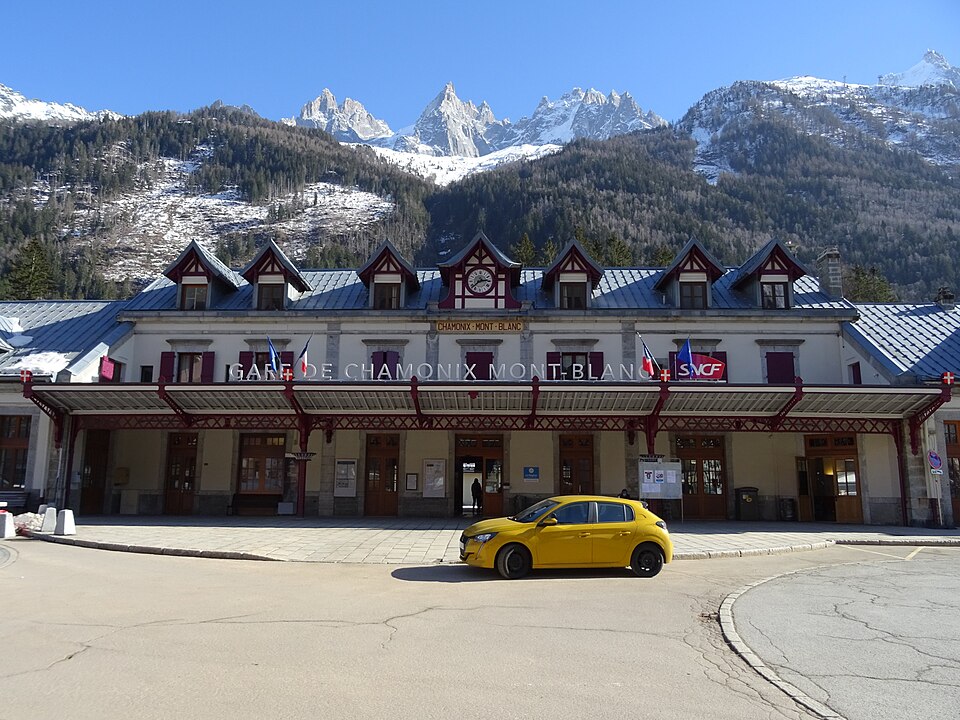
Nestled on Rue des Allobroges at the foot of the iconic Mont Blanc, the Chamonix Train station is more than just a stop on the SNCF network; it’s the first breath of crisp mountain air that greets travelers heading for the famed Chamonix‑Mont‑Blanc valley. Whether you arrive by the TER Auvergne‑Rhône‑Alpes or hop on the historic Mont Blanc Express, the station blends modern convenience with Alpine heritage. With a 4.5‑star rating from visitors, the hub offers clear signage, a modest yet functional parking area, and a host of services that make the transition from train to piste seamless.
From the moment you step onto the platform, the rhythm of the valley is palpable – the distant whistle of a locomotive, the chatter of hikers, and the soft hum of the nearby cable cars. In the sections that follow you’ll find practical details about opening hours, ticketing, accessibility, and the train lines that connect Chamonix to Saint‑Gervais‑les‑Bains‑Le Fayet, Vallorcine and beyond. Let’s dive in.
Table of Contents
Station basics: address, altitude and parking facilities
The official address of the station is Rue des Allobroges, 74400 Chamonix-Mont-Blanc, France. Situated at an altitude of roughly 1,035 m, the location offers spectacular views of the surrounding peaks while remaining easily reachable by road. A modest parking area lies just outside the main entrance, offering space for about 70 cars; a separate section for motorcycles and bicycles ensures that even the most eco‑conscious travelers have a spot.
For those arriving by car, the station is reachable via the D1506, which connects directly to the A40 motorway. Signage on the highway clearly points to “Gare SNCF Chamonix” and the parking zone is well‑marked, with illuminated spaces that remain safe after sunset.
Key data at a glance
| Item | Details |
|---|---|
| Latitude / Longitude | 45.922755 / 6.8738124 |
| Point kilométrique | 57.1 km from Saint‑Gervais‑les‑Bains‑Le Fayet |
| Altitude | ≈ 1 035 m |
| Parking capacity | ≈ 70 cars + 15 motorcycles/bicycles |
Opening hours, ticketing and the billetterie experience
The station’s horaires d’ouverture are designed to match the rhythm of the mountain trains. The ticket hall opens at 06:30 am and closes at 20:00 pm on weekdays, extending to 22:00 pm on summer weekends when the Mont Blanc Express runs later. A self‑service distributeur de titre operates 24 hours, allowing travelers to buy or validate tickets even after the guichet has closed.
Inside the main hall you’ll find a traditional guichet staffed by knowledgeable SNCF agents. They provide help with regional passes, seat reservations on the TER line and advice on connecting bus services. For those who prefer digital solutions, the SNCF app can be used on the spot; a free Wi‑Fi hotspot is available throughout the waiting area.
Tickets you’ll typically need
- TER Auvergne‑Rhône‑Alpes tickets (Chamonix‑Mont‑Blanc ↔ Saint‑Gervais‑les‑Bains‑Le Fayet)
- Mont Blanc Express day passes (Vallorcine – Chamonix – Saint‑Gervais)
- Seasonal ski‑area tickets (often sold in partnership with the railway)
- Regional “Carte Mobilité” for unlimited travel within Auvergne‑Rhône‑Alpes
Connectivity: the TER line, Mont Blanc Express and bus links
The heart of the station’s traffic is the ligne TER operated by SNCF. This line is part of the TER Auvergne‑Rhône‑Alpes network and runs hourly between Saint‑Gervais‑les‑Bains‑Le Fayet and Chamonix‑Mont‑Blanc. The train is a narrow‑gauge, voie métrique marvel that hugs the valley and climbs to the point kilométrique 57.1, where it meets the historic Mont Blanc Express.
The Mont Blanc Express continues beyond Chamonix to Vallorcine, crossing the border into Switzerland. Its scenic route offers panoramic windows that showcase the glacier‑speckled landscape – a favorite among photographers. Typical travel times are:
| Route | Duration | Frequency (peak season) |
|---|---|---|
| Saint‑Gervais‑les‑Bains‑Le Fayet → Chamonix‑Mont‑Blanc | 45 min | Hourly |
| Chamonix‑Mont‑Blanc → Vallorcine | 30 min | Every 2 hrs |
When the trains are not running – particularly early mornings or late evenings – the station is served by a network of bus routes. Line 74 connects the station to the Aiguille du Midi cable‑car base, while line 84 runs to the nearby ski resorts of Les Houches and Le Tour. All bus stops are clearly signposted inside the main hall, and real‑time displays show the next departure.
Accessibility and services d’assistance
Accessibility is a cornerstone of the station’s design. Ramps lead from the main entrance to the platforms, while elevators are available for those with reduced mobility. The services d’assistance team operates from 07:00 am to 19:00 pm, offering wheelchair assistance, help with luggage and guidance for visually impaired passengers. All information panels feature braille and audio announcements.
For travelers needing extra support, the “Assistance SNCF” service can be booked online up to 48 hours in advance. On the day of travel, a dedicated staff member meets you at the plan de la gare kiosk and escorts you to your train. The station also hosts a small café with wheelchair‑accessible tables, providing a comfortable spot to rest before boarding.
What to expect from the assistance desk
- Free wheelchair loan for the duration of your journey
- Help with boarding and alighting on the narrow‑gauge TER
- Information in French, English and German
Historical snapshots: from mountain outpost to modern hub
Opened in 1901 as part of the first line linking Chamonix to Saint‑Gervais, the station started as a modest wooden shelter serving early alpinists. The original ligne TER was built on a voie métrique to navigate the tight curves of the Alpine valley. Over the decades, the station expanded, adding a brick façade in the 1930s and a modern glass‑roofed concourse in 2018, reflecting the growing importance of tourism in Haute‑Savoie.
Preserved artefacts, including a vintage signalling lever and early 20th‑century timetables, are displayed in a small exhibition corner near the ticket hall. These pieces narrate the evolution of rail travel from steam locomotives to today’s comfortable TER units, reminding visitors that the station is both a functional gateway and a living museum of Alpine rail heritage.
Key milestones
- 1901 – Inauguration of the first narrow‑gauge line
- 1936 – Construction of the building
- 1979 – Introduction of the Mont Blanc Express service
- 2018 – Renovation and installation of digital information screens
Frequent Asked Questions
How can I buy a ticket for the Mont Blanc Express?
You can purchase a Mont Blanc Express ticket at the guichet, via the self‑service distributeur de titre, or through the SNCF mobile app. Discounts are available for youth, seniors and holders of the regional “Carte Mobilité”. The ticket is valid for both the Chamonix‑Vallorcine section and onward connections to Saint‑Gervais‑les‑Bains‑Le Fayet.
Is there luggage storage at the station?
Yes. A secure luggage locker area is located in front of the station, offering lockers in sizes. Fees are modest and the service operates from opening until closing hours.
What are the options for traveling from the station to the Aiguille du Midi?
The quickest option is the local bus line 74, which departs every 20 minutes during the summer season and drops you at the base of the cable‑car. Alternatively, a taxi stand outside the station provides direct transfers, though at a higher cost.
Can I travel on the TER if I have a bike?
Yes. The TER Auvergne‑Rhône‑Alpes allows bicycles on board for a small surcharge. Space is limited, so it’s advisable to board early, especially during peak ski season.
Beyond the tracks: making the most of your stop at Chamonix Station
Arriving at the Chamonix Train Station opens a portal to the entire Chamonix‑Mont‑Blanc area. Within a five‑minute walk you’ll find the famed Alpine Museum, a cozy cheese shop, and several eateries offering local specialties such as tartiflette and fondue.
For those whose itinerary includes a ski day, the station’s proximity to the bus depot means you can catch a shuttle to Les Houches or Brévent in under ten minutes. Families traveling with children will appreciate the nearby services d’assistance that include stroller rentals and a small play corner inside the waiting area.
In short, the station is not just a point of arrival – it’s a gateway to adventure, culture and the warm hospitality that defines the Alpine region.