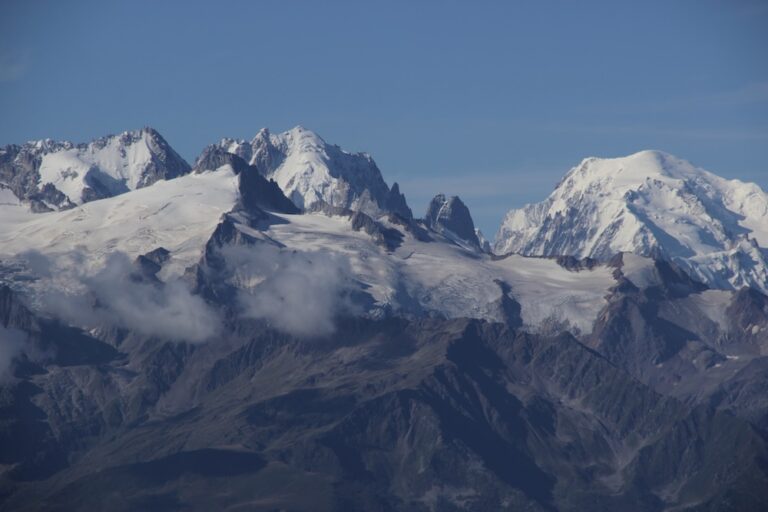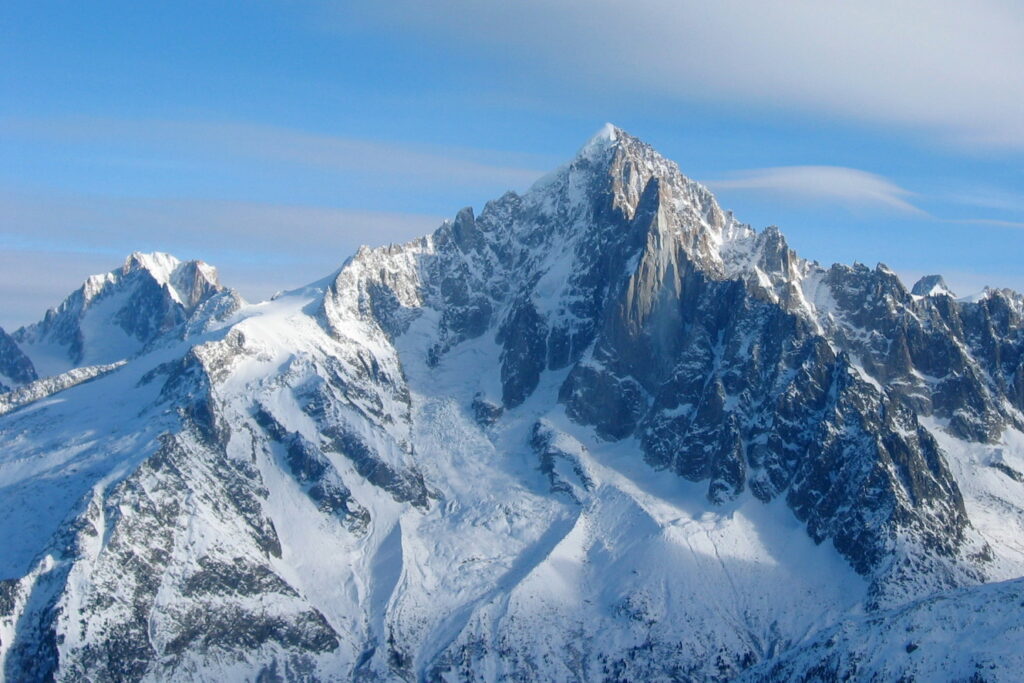
Rising 4,122 m above the turquoise valleys of Haute‑Savoie, the Aiguille Verte dominates the skyline of the Mont Blanc massif and draws climbers, skiers and adventure seekers from around the globe. Its sharp, green‑tinged summit, a needle of rock and ice, offers a dramatic mix of alpine glacier travel, steep rock ridges and exposed couloirs that make every ascent a story in itself. Whether you are planning a summer climbing trip, a winter ski tour or simply want to admire the sunrise from the summit, the mountain provides a playground that tests skill, courage and respect for the mountain environment. In this guide we will walk you through the historic first ascent, the most frequented routes – from the classic Whymper Couloir to the hidden Arête du Moine – and the practicalities of reaching the base via cable car, navigating the Talefre glacier and staying in the mountain huts that keep you close to the action.
From the early days when Edward Whymper, Christian Almer and Michel Croz first set foot on the needle, to modern ski descents on the Nant Blanc face, the Aiguille Verte has earned a reputation as both a technical challenge and a majestic landmark. Below you will find everything you need to plan a safe, exhilarating and well‑informed adventure: route grades, gear checklists, altitude acclimatization tips, incident statistics and a concise FAQ that answers the most common doubts. Let’s dive into the heart of the mountain and discover why this 4,122‑metre peak remains one of the most iconic objectives in the French Alps.
Table of Contents
First ascent of Aiguille Verte in 1865 – a daring Alpine milestone
The story begins on July 31 1865, when a small party led by Edward Whymper, accompanied by the Swiss guides Christian Almer and Michel Croz, tackled the unknown. Their route, now known as the “first ascent”, followed the southeast ridge, a line that combined mixed snow, ice and tricky rock sections. The climb was a true mountaineering adventure: the team had to negotiate a steep glacier crossing, a narrow ridge that threatened a fall into the abyss, and a final push on exposed rock to reach the 4,122 m summit.
Whymper later recounted the feeling of standing atop the needle, looking down at the sea of peaks that form the Mont Blanc massif. The ascent proved that the Alpine challenges of the 4000 m peak class could be overcome with careful planning, solid rope techniques and a dash of audacity. This historic feat laid the groundwork for the many routes that now criss‑cross the mountain, each offering its own blend of technical difficulty and aesthetic appeal.
Key figures of the era
- Edward Whymper – English alpinist, author of *Scrambles Amongst the Alps*.
- Christian Almer – Swiss guide celebrated for his ice‑climbing prowess.
- Michel Croz – The “Swiss Devil”, renowned for his daring speed on rock.
- Franz Biner – Lesser‑known guide who contributed to early explorations of the north face.
Iconic routes – Whymper Couloir and the Arête du Moine alternative
The Whymper Couloir is arguably the most famous line on the Aiguille Verte. First opened as a descent in 1865, it has evolved into a classic climbing route that tests both technical skill and psychological stamina. The couloir drops steeply from the summit, carved into a wall of hard ice and compacted snow. Modern ascents are graded AD (assez difficile) – a challenging but doable line for well‑acclimatized parties equipped with crampons, ice axe and a reliable harness.
During the summer, the couloir can be icy and requires careful placement of crampons. In winter, it transforms into a thrilling ski descent for experienced ski tourers, though the avalanche risk increases dramatically. The route’s exposure to the north wind means that snow conditions can change within hours, and a sudden storm can turn a safe descent into a life‑threatening situation.
Arête du Moine – a less crowded descent
For those seeking an alternative to the popular Whymper Couloir, the Arête du Moine offers a more secluded ridge descent. The ridge follows a series of gentle rock steps that lead from the summit toward the north face, gradually losing altitude before joining the grid of the Talefre glacier. The grade sits at III, making it suitable for climbers comfortable on mixed terrain but who prefer less vertical exposure than the couloir provides.
Because the Arête du Moine is less trafficked, the route can be covered in fresh powder after a snowfall, creating excellent conditions for a ski tour. However, its lower popularity means that rescue services may need extra time to locate a party in trouble, reinforcing the need for a robust personal safety equipment kit.
Winter challenges – Couturier Couloir, Nant Blanc and avalanche safety
Winter is the season when the Aiguille Verte truly shows its alpine character. Two routes dominate the conversation among winter alpinists: the Couturier Couloir and the Nant Blanc face. The former, a deep, narrow gully on the east side, is graded D+ and demands aggressive ice‑climbing techniques. The latter, a broad south‑facing slab, appeals to ski tourers looking for a long, uninterrupted run toward the summit.
Both routes share a common risk factor – avalanches. In recent years, incidents recorded in 2014, 2018 and 2023 have underscored the importance of checking the snow conditions before committing to an ascent. Local guides advise consulting the avalanche bulletin issued by the Chamonix safety office, and always carrying a transceiver, probe and shovel, even on “easy” days.
Typical winter itinerary
- Take the cable car to the Huber Pass (2,460 m).
- Cross the Talefre glacier on skis or crampons, depending on conditions.
- Set up a high camp at the Refuge du Couvercle (2,650 m) for early morning starts.
- Climb the Couturier Couloir or Nava Blanc, aiming for a sunrise summit view.
- Descend via Whymper Couloir or Arête du Moine, depending on snow stability.
Getting there – cable car, glacier navigation, and mountain huts
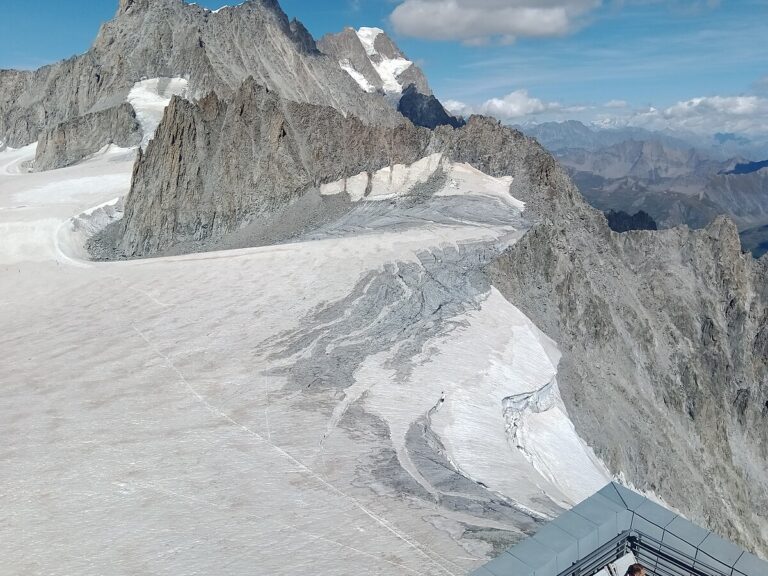
Reaching the base of the Aiguille Verte is relatively straightforward thanks to the extensive cable car network that services Chamonix. From the town centre, the Aiguille du Midi cable car whisks you to 3,842 m in just 20 minutes, placing you within striking distance of the mountain’s north face. From there, a short traverse leads onto the Talefre glacier, a smooth, crevassed field that feeds the routes on both the east and west sides.
Two alpine mountain huts act as vital staging points: the Refuge d’Argentière (2,370 m) on the south side and the Refuge du Couvercle (2,650 m) on the north. Both offer simple dormitory accommodation, a communal kitchen and a reliable source of hot meals for weary climbers. Booking is highly recommended during the peak summer months of July and August, as the huts can fill up fast.
Glacier navigation tips
- Always travel with a certified mountain guide when crossing unknown crevasses.
- Use a rope team of at least two, with a dynamic rope of 60 m.
- Check daily weather forecasts – sudden temperature drops can harden snow bridges.
- Mark your path with pick‑poles to aid in case of a rescue.
Practical guide – acclimatization, gear checklist and safety analysis
At 4,122 m the altitude is high enough to affect anyone who hasn’t spent time at elevation. A sensible acclimatization plan includes an ascent day to the Aiguille du Midi, a night at the Refuge du Couvercle, and a rest day at Chamonix before attempting the summit. Most climbers report that a minimum of 1,500 m of vertical gain over 2–3 days helps mitigate the risk of acute mountain sickness.
Equipment wise, the technical gear list is extensive but can be trimmed to essentials for experienced parties. Below is a concise checklist that covers the most common scenarios on the Aiguille Verte:
| Category | Item | Why it matters |
|---|---|---|
| Footwear | Alpine boots (stiff, crampon compatible) | Ensures secure footing on ice and rock. |
| Climbing | Dynamic rope (60 m), harness, helmet | Core safety for falls and rockfall. |
| Ice tools | Technical ice axe, crampons (10‑point) | Essential for steep ice in Whymper Couloir. |
| Protection | Quickdraws, nuts, cams (for mixed terrain) | Secure anchorage on rock sections. |
| Navigation | Altimeter, GPS, topographic map (1:25 000) | Crucial on glacier and for route finding. |
| Weather | Wind‑proof jacket, insulated layers, balaclava | Protects against sudden alpine storms. |
| Emergency | First‑aid kit, avalanche transceiver, probe, shovel | Life‑saving tools in case of accidents. |
Analysis of incidents over the past decade reveals that most accidents on the Aiguille Verte involve either a slip on ice (often in the Whymper Couloir) or a crevasse fall on the Talefre glacier. Fatalities, although rare, have occurred in 2014, 2018, 2023 and 2024, highlighting the need for thorough risk assessment and the presence of an experienced mountain guide. In addition to the physical challenges, weather can shift rapidly: a clear morning can turn into a whiteout within minutes, especially on the north face.
Acclimatization and altitude tips
We recommend a “climb‑high, sleep‑low” routine – spend a night above 3,000 m, then descend to a lower altitude for recovery. Hydration is also key; alpine air is dry, and dehydration amplifies the effects of altitude. Finally, listen to your body – a mild headache or nausea should be taken seriously, and a retreat to lower ground is always the wiser choice.
Statistics and facts – summit data, prominence and coordinates
Below is a quick reference table that sums up the most relevant quantitative data about the Aiguille Verte:
| Parameter | Value |
|---|---|
| Elevation | 4,122 m (13,524 ft) |
| Prominence | 363 m |
| Isolation | 2.3 km |
| Latitude | 45.88° N |
| Longitude | 6.95° E |
| First ascent | Year 1865 (Edward Whymper team) |
| Typical route grade | AD / D+ (depending on line) |
| Main couloirs | Whymper, Couturier, Nant Blanc |
The Aiguille Verte sits in the heart of the French department of Haute‑Savoie, within the protected area of the Mont Blanc massif. Its north‑south orientation offers a variety of sun exposure, which affects snow stability, ice formation and even the colour of the rock – a distinctive greenish hue that gives the mountain its name, “Green Needle”.
Frequent Asked Questions
What does Aiguille Verte mean?
The name Aiguille Verte literally translates from French as “Green Needle”. The “green” refers to the subtle hue of the rock that can be seen when sunlight strikes the summit in the early morning, while “needle” describes its slender, pointed shape that dominates the skyline of the Mont Blanc massif.
When is the best season to attempt the Whymper Couloir?
Most alpinists favour late June to early September for the Whymper Couloir. During this window the snow is firm enough for safe crampon placement, yet the risk of deep, unstable snow is lower than in early spring. In winter the couloir becomes a classic ski descent, but only for those with advanced avalanche training.
Do I need a mountain guide to climb Aiguille Verte?
While it is not a legal requirement, hiring a certified mountain guide is strongly recommended, especially for first‑time visitors. Guides provide local knowledge of crevasse patterns on the Talefre glacier, assist with route finding on mixed terrain, and can significantly reduce the risk of accidents.
How can I improve my chances of successful acclimatization?
Adopt a gradual ascent profile: spend at least two nights above 2,500 m, incorporate rest days, and stay well‑hydrated. Many climbers also use “climb‑high, sleep‑low” strategies, such as ascending to the Aiguille du Midi and then returning to Chamonix for the night.
What is the typical cost of a guide for an Aiguille Verte expedition?
Guide fees vary depending on the season and length of the objective, but a typical price range for a day‑long guided ascent in summer is €450‑€650 per guide. This usually includes equipment, safety briefings and the guide’s expertise on route selection.
Can I ski down the Nant Blanc face?
Yes, the Nant Blanc is a favourite ski‑tour line for experienced back‑country skiers. The descent offers long, sustained powder runs and a spectacular view of the surrounding peaks. However, skiers must be prepared for potential avalanche terrain and carry the full set of rescue gear.
Beyond the climb – why Aiguille Verte should be on your bucket list
The allure of the Aiguille Verte goes beyond its technical challenges. Standing on the summit, you are greeted by a panoramic tableau that includes the towering dome of Mont Blanc, the jagged silhouettes of the Grandes Jorasses and the shimmering expanse of the Mer de Glace. Sunrises here are legendary – the first rays turn the snow a rose‑gold colour, while the valley below awakens to the distant sound of church bells.
Moreover, the mountain’s close ties to the birth of modern alpinism give it a romantic heritage. Each step you take follows in the footprints of Whymper, Almer and Croz, a lineage that still inspires today’s climbers. Whether you are a seasoned mountaineer, a ski tour enthusiast or simply a lover of majestic landscapes, the Aiguille Verte offers a unique blend of history, challenge and unbeatable scenery that makes it a must‑visit destination in the Chamonix Vibes guide.