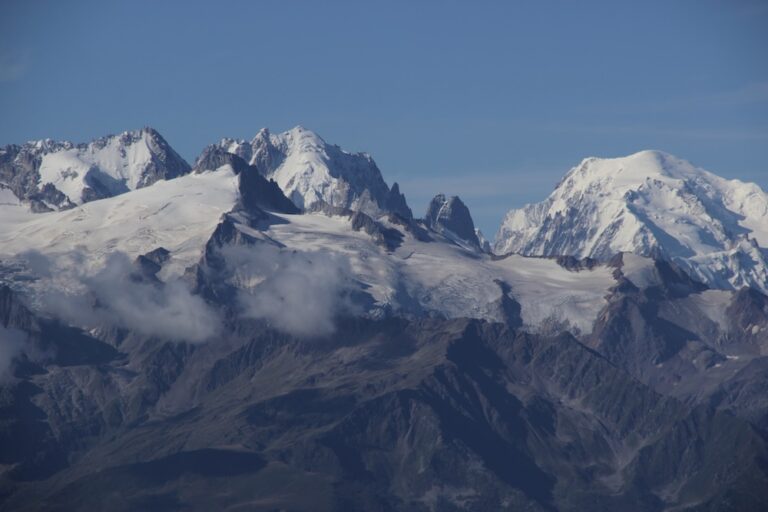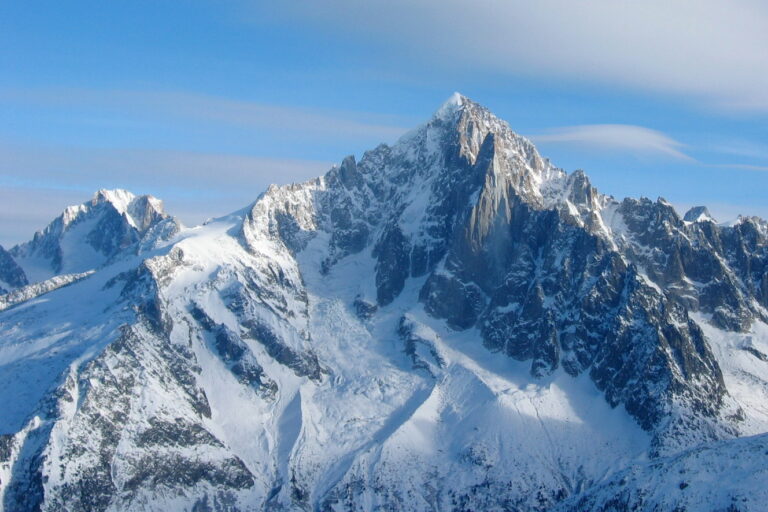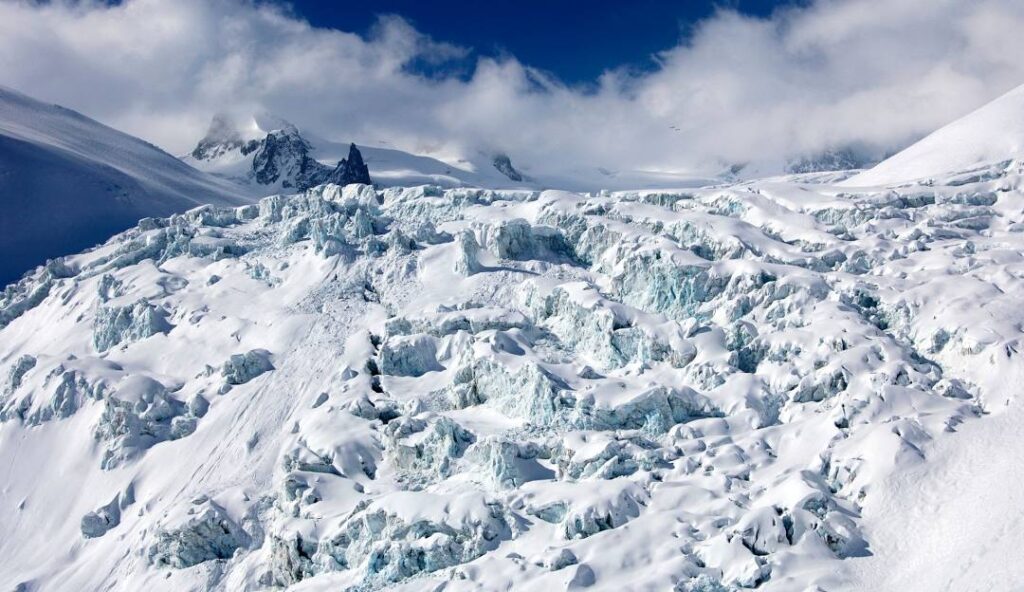
Rising like a frozen river of light from the heart of the Alps, the Glacier du Géant dominates the horizon above the Vallée Blanche. Its blue‑white mass stretches over 7 km, fed by the great snowfields of Mont Blanc and the steep cliffs of the Aiguille du Midi. From the bustling resort of Chamonix you can feel its presence even before you set foot on the trail – the wind carries a crisp scent of ice, and distant echoes of climbers reverberate across the peaks. Whether you are a seasoned ski mountaineer, a photo‑hungry traveler, or a curious soul looking for a slice of France’s glacial heritage, the Géant offers an unforgettable mix of high‑altitude drama and scientific intrigue. In the paragraphs that follow we will untangle the glacier’s geography, its storied past, the best routes for a glacier hike, and practical advice that turns an ambitious day trip into a safe, awe‑inspiring adventure.
First discovered by early Alpine explorers, the glacier has long served as a natural laboratory for researchers like John Tyndall of the Royal Institution, who in the 1860s measured the heat exchange between ice and surrounding air, laying foundations for modern glaciology. Today, the same ice fields tell a different story – one of rapid retreat driven by rising temperatures, yet still offering a solid surface for ski‑tourers, trekkers, and even rock climbers seeking new routes on adjacent ridges. Below we link the past to the present, offering a map of possibilities that includes the classic Mer de Glace and the adjacent Col d’Entrèves crossing that connects Italy to the French side of the mountain range. Strap on your boots, adjust your crampons, and let’s dive into the world of the Géant.
Table of Contents
Understanding the glacier: geography and history
The Glacier du Géant sits at an average altitude of 2 700 m, positioned between the iconic peaks of the Mont Blanc massif and the striking limestone walls of the Pointe Helbronner. Its accumulation zone receives fresh snow from the north‑west wind, while the ablation zone—facing south—melts in the summer sun, creating a dynamic surface of crevasses, seracs, and occasional melt‑water streams.
Geologically, the glacier is a classic example of a cirque glacier that has grown into a valley glacier, carving out the famous Vallée Blanche that now serves as a high‑altitude ski run frequented by world‑class ski mountaineers. The ice is up to 250 m thick in places, and beneath the surface lies a network of sub‑glacial streams that feed the famous Mer de Glace. These hidden rivers have been mapped by glaciologists using ground‑penetrating radar, revealing a complex system of channels that shift with each summer melt.
Historical records trace the glacier’s name back to the 19th‑century cartographers, who labeled it “Géant” for its imposing size. In 1865, John Tyndall gave a famous lecture at the Royal Institution, describing the glacier’s “motion” as a slow but relentless flow, driven by the heat of the sun and internal deformation of ice crystals. His observations were among the first to link glacial retreat to climate, a connection that modern scientists monitor closely as the glacier loses several meters of thickness each decade.
Today, the glacier is part of the Alpine protected area managed jointly by French and Italian authorities. The cross‑border nature of the region means that you can start a day hike in France and, after a few hours, find yourself looking over the Italian side of the Alps, with the town of Courmayeur visible on a clear day. This unique setting makes the Glacier du Géant not only a geological marvel but also a cultural bridge linking two Alpine nations.
Top glacier hike routes around Glacier du Géant
Below you’ll find the most popular and rewarding routes that allow you to experience the ice, snow, and spectacular panoramas that surround the glacier. Each trail is described in terms of length, elevation gain, difficulty, and the type of experience you can expect – from gentle strolls suitable for families to technical treks that demand a certified mountain guide.
Glacier hike at the Col du Géant – 3 466 m
The Col du Géant route is a classic high‑altitude trek that starts from the Aiguille du Midi cable car station (3 842 m) and descends to the col at 3 466 m, offering unrivaled views of the surrounding peaks. The trail is 4 km long, with a moderate elevation loss of 376 m, making it suitable for fit hikers who are comfortable on icy surfaces.
- Duration: 2‑3 hours round‑trip
- Key highlights: panoramic vista of the Mont Blanc dome, ice fields of the Géant, and a chance to spot a distant iceberg calving into a melt‑water lake.
- Safety notes: the route crosses a crevasse‑filled section; use a rope and crampons if conditions are firm.
During the summer months the trail is often covered in a thin crust of snow, ideal for beginners who wish to experience a gentle glacier hike without committing to extensive technical gear.
Col d’Entrèves traverse – a high‑altitude adventure
For those craving a longer, more demanding day, the Col d’Entrèves traverse offers a 12 km trek with an impressive cumulative elevation gain of 1 200 m. Starting at the Aiguille du Midi and moving westwards, you will cross the Géant’s ice tongue, negotiate narrow ledges, and finally descend into the serene valley of Saint‑Gervais.
| Stage | Distance (km) | Elevation gain (m) |
|---|---|---|
| Start – Aiguille du Midi to Col du Géant | 4.0 | 376 |
| Col du Géant to Col d’Entrèves | 6.0 | 824 |
| Total | 12.0 | 1 200 |
The route is popular among ski mountaineers in early spring when the snow is compact and the slopes are ideal for “ski touring” across the glacier. In late summer, however, the trail becomes a traditional alpine hike with patches of bare ice that demand careful foot placement.
Longest and most challenging trail – the “Grand Traverse”
If you’re hunting the ultimate test, the “Grand Traverse” links the Géant’s western ice flow to the nearby Glacier Blanc, crossing over demanding ridgelines and deep crevasses. The circuit spans roughly 22 km and can take up to 10 hours, depending on conditions. It includes the following sections:
- Géant to Dent du Géant – a technical scramble (rock climbing grade III) with exposure to the south‑facing cliff.
- Glacier Blanc descent – a classic Alpine glacier trek requiring a mountain guide for safe navigation of hidden crevasses.
- Final ascent to the Pointe Helbronner via a mixed snow‑ice route ending at the famed cable car platform.
Because of its length and technical demands, this trail is recommended only for experienced alpinists, preferably accompanied by an IFMGA‑certified guide.
Guided experiences: professional mountain guides and IFMGA trips
While the mountains of the Alps are welcoming, the Crevasse‑filled glacier terrain can be unforgiving. Hiring a certified mountain guide not only improves safety but also enriches your understanding of the glacier’s geology, history, and local culture.
One‑day guided traverse with a certified mountain guide
Many local guiding companies in Chamonix offer a full‑day “Geant Traverse” that includes:
- Pick‑up from the cable car base at Aiguille du Midi (3 842 m).
- Technical instruction on the use of crampons, ice axes, and rope systems.
- Professional navigation across the glacier’s “hard” zones where hidden crevasses appear.
- Continuous monitoring of avalanche risk, with updates from the local mountain rescue service.
Guides emphasize a “low‑impact” approach, teaching hikers how to tread lightly on the snow and avoid damaging delicate ice formations while still capturing that perfect photo of the sun setting behind Mont Blanc.
Safety, crevasse rescue, and avalanche awareness
Every guided group receives a short lecture on avalanche safety: how to interpret the recent snowpack, the importance of a “buddy system,” and the use of transceivers. Guides also demonstrate the technique for extracting a teammate from a crevasse – a critical skill when you’re on a glacier that can shift several meters a year.
Even experienced skiers and mountaineers sometimes underestimate the speed at which a glacier can move under their feet. A quick tip: always aim to walk perpendicular to the direction of ice flow, which reduces the chance of slipping into a hidden fissure.
Connecting France and Italy: the spectacular cross‑border tour
The Glacier du Géant sits astride the iconic border between France and Italy, and a well‑planned tour can showcase the best of both nations. Starting from the Pointe Helbronner cable car (3 466 m) on the Italian side, travelers can descend onto the glacier, cross the icy expanse, and emerge near the French settlement of Les Houches.
- Italian leg: The cable car lifts you to a panoramic terrace where the Matterhorn’s shadow stretches across the ice.
- Glacier crossing: A gentle glide over the ice, occasionally interrupted by ski‑tourers carving fresh tracks.
- French finish: The descent offers sweeping views of the Vallée Blanche and the towering Aiguille du Midi, ending at the historic Chamonix‑Montenvers station.
This route is a favorite for photographers – the contrast of Italian flag‑colored rooftops against the white silence of the Géant creates a striking composition. Even more, the tour highlights the cooperative management of the Alpine environment, with joint rescue teams from both nations patrolling the glacier year‑round.
Practical tips for a successful glacier hike
Before setting out, arm yourself with knowledge and the right gear. Below are essential pointers that separate a memorable adventure from an avoidable mishap.
Equipment, clothing, and photo opportunities
Even on summer days, temperatures at 2 500 m can dip below zero, especially when wind picks up. Dress in layers: a moisture‑wicking base, an insulated mid‑layer, and a waterproof, breathable outer shell. Don’t forget a headlamp – the glacier reflects light in surprising ways, and early morning or late afternoon shots can be spectacular.
- Footwear: Sturdy mountaineering boots compatible with crampons.
- Safety gear: Harness, rope (minimum 30 m), ice axe, and a pair of trekking poles with snow baskets.
- Photography: A wide‑angle lens captures the vastness, while a telephoto brings distant peaks into focus. Polarizing filters help reduce glare on the ice.
Remember to pack extra batteries – the cold drains power quickly. Also, bring a small first‑aid kit and a high‑energy snack (nuts, chocolate) to sustain you during the climb.
When to go: snow, ice conditions and weather
The ideal window for a glacier hike runs from late June to early September. Early summer offers firm snowpack, perfect for ski‑tourers, while late summer provides more exposed ice and clearer skies for photography. Always check the local weather forecast; a sudden storm can bring heavy snow and reduce visibility dramatically.
Local authorities publish a daily “glacier conditions” report on the Chamonix tourist office website, indicating crevasse danger levels and the state of the cable car facilities. If the report flags “high avalanche risk,” consider postponing your trek – the mountains will be there another day, but your safety is priceless.
Frequent Asked Questions
Can beginners attempt a hike on the Glacier du Géant?
Yes, but only on the easier sections such as the Col du Géant route, which is relatively short and has a gentle slope. Beginners should still use crampons and a walking pole, and it’s mandatory to hire a local mountain guide to learn basic glacier safety.
What is the best time of year for a glacier hike?
The optimal period runs from late June to early September. Early summer offers firmer snow that is ideal for ski‑touring, while late summer provides clearer skies and more exposed ice, which is perfect for photography and foot‑only trekking.
How risky is crossing crevasses on the glacier?
Crevasses are a natural hazard on any glacier. The risk can be mitigated by traveling roped together, probing the snow ahead with an ice axe, and staying on marked routes. Professional guides are trained to assess and avoid the most dangerous sections.
Is a cable car necessary to reach the starting point?
While it is possible to approach the glacier on foot from the valley, the Aiguille du Midi cable car (3 842 m) provides the quickest and safest access to the high‑altitude trailheads, saving several hours of ascent and allowing more time for the actual glacier experience.
What wildlife might I see while hiking?
The high‑altitude zone is mostly barren, but you may spot alpine ibex grazing on rocky ledges, golden eagles soaring above the ridges, and occasional marmots scurrying between the rocks. Keep a respectful distance to avoid disturbing them.
Why the Glacier du Géant should be on your Alpine bucket list
From its awe‑inspiring scale to its role as a natural laboratory for climate research, the Glacier du Géant embodies everything that makes the Alps a magnet for adventure seekers. Whether you chase the perfect photo of sunrise over Mont Blanc, test your skills on a technical ridge, or simply enjoy a leisurely walk across a sea of ice, the glacier offers a spectrum of experiences.
Moreover, the region’s seamless blend of French and Italian cultures, world‑class guiding services, and well‑maintained infrastructure (including the iconic Aiguille du Midi cable car) ensure that your visit is both safe and enriching. As the climate continues to reshape these mountains, each step on the Géant becomes a reminder of the fragile beauty we are privileged to witness.
So lace up your boots, check the avalanche bulletin, and set your sights on the glacier that has captivated explorers for over a century. The Géant is waiting, and it promises a story you’ll retell for years to come.