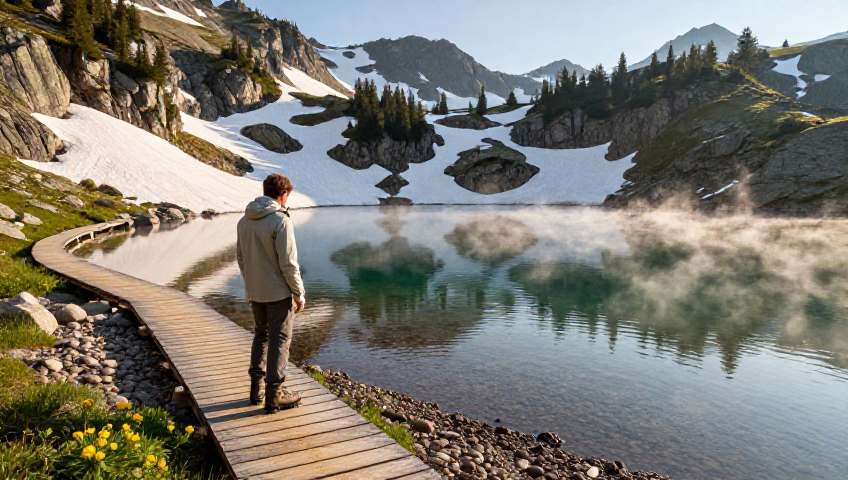
When you picture a journey from the flat, tulip‑strewn fields of the Netherlands to the snow‑capped peaks of the French Alps, a rush of contrasts floods the mind. Yet the reality is far more exciting than the cliché of a straight line on a map. Travel Netherlands to Chamonix can be as relaxed as a scenic train ride, as fast as a short flight, or as adventurous as a road trip through three countries. Whether you’re chasing powder, aiming for a summer hike, or simply craving a change of scenery, the options are plentiful and the vistas unforgettable.
In the coming sections we’ll break down the main ways to make the crossing, flag the hidden costs you might not expect, and hand you a handy comparison table so you can pick the mode that matches your budget, timetable and appetite for adventure. Buckle up (or fasten your seatbelt, or simply pack a travel pillow) and let’s explore how to go from the Netherlands to the heart of the Chamonix valley.
Table of Contents
By Car – The open‑road adventure from Amsterdam to Chamonix
Driving gives you full control over stops, scenery and timing. The direct route from Amsterdam to Chamonix runs roughly 1 150 kilometres and takes about 11 hours without traffic, but most travelers stretch the trip over two or three days to soak in the changing landscapes.
Planning your route
The most popular itinerary follows the A1 towards Utrecht, then the A2 south to Maastricht. From there you cross the border into Belgium via the E40, zip through Liège and head into Luxembourg. Once in Luxembourg you join the A1/E44 towards Trier, then follow the German A64 and A5 into the Black Forest region of Baden‑Württemberg. The final leg takes you through the Swiss canton of Valais via the A9, before descending the steep but well‑maintained hairpin roads into Chamonix.
- Key toll points: Dutch highways are mostly toll‑free, but you’ll encounter tolls in Belgium (≈€15), Luxembourg (minor) and Switzerland (≈CHF 40 for a vignette). The French autoroute from Geneva to Chamonix also requires a toll (≈€12).
- Scenic stops: Maastricht’s historic centre, the Ardennes forest, the German Black Forest (Freiburg is a good lunch break), and the Swiss town of Martigny for a taste of Alpine wine.
- Required documents: Valid driver’s licence, passport or ID card, and a Swiss vignette (can be bought at the border).
For those who prefer a less stressful drive, renting a compact car in Amsterdam and swapping to a larger SUV in Geneva can ease the mountain sections. Remember that mountain passes like the Mont Blanc Tunnel close for maintenance in winter, so check schedules if you’re traveling between November and March.
By Train – Connecting Amsterdam, Paris and Geneva to Chamonix
European rail is legendary for comfort, punctuality and scenery. While there is no direct high‑speed line from the Netherlands to Chamonix, a combination of ICE, TGV, and regional trains makes the journey surprisingly smooth.
Amsterdam to Chamonix by train
The most efficient route starts at Amsterdam Centraal, where you board an ICE to Cologne (about 2 h 45 min). From Cologne, a TGV takes you to Paris Gare de Lyon (≈3 h 30 min). In Paris, change to a TGV Lyria to Geneva (≈3 h), then hop on a TER regional train to Saint‑Gervais‑les‑Bains (≈1 h 15 min). Finally, the Mont Blanc Express climbs the valley to Chamonix in roughly 1 hour.
Overall travel time, including transfers, sits around 12‑13 hours – comparable to driving but without the fatigue. Seats can be reserved in advance; first‑class tickets offer extra legroom and a complimentary meal on some services.
Paris to Chamonix train
If you’re already in Paris, the direct TGV from Paris Gare de Lyon to Saint‑Gervais‑les‑Bains takes about 5 hours. From there, the Mont Blanc Express runs hourly during the summer season, delivering you to Chamonix’s centre in just over an hour. The journey is famous for its panoramic windows that frame the alpine landscape like a living postcard.
Geneva to Chamonix train
One of the quickest rail options is the regional train from Geneva Cornavin to Saint‑Gervais‑les‑Bains (≈1 h 20 min). The connection is frequent, especially during the ski season, and the fare is modest. From Saint‑Gervais, the Mont Blanc Express again does the final leg. This leg offers the most dramatic change of scenery, as you leave the lake‑bordering city of Geneva and wind your way up the valley.
| Origin | Main Transfer(s) | Total Approx. Time |
|---|---|---|
| Amsterdam | ICE → TGV → TGV Lyria → TER → Mont Blanc Express | 12‑13 h |
| Paris | TGV → Mont Blanc Express | 6‑7 h |
| Geneva | Regional Train → Mont Blanc Express | 2‑3 h |
Booking ahead can save you up to 30 % on ticket price, especially on the high‑speed segments. Remember to validate your regional tickets before boarding, or you might face a fine at the gate.
By Air – Flights that get you closer to the Alps
Flying is the fastest way to cut the distance, but you’ll still need ground transport for the final 80 km to Chamonix. The most common airports used by travellers from the Netherlands are Amsterdam Schiphol (AMS) and, for a shorter hop, Geneva International (GVA).
Amsterdam to Chamonix flight (via Geneva)
There are no direct commercial flights from Amsterdam to Chamonix’s tiny Courchevel Altiport, so the typical route is Amsterdam → Geneva (≈1 h 30 min). From Geneva Airport you can either rent a car, take a shuttle, or board a train (as described above). Several airlines run daily flights, and the fare range in 2025 is €80‑€180 for a round‑trip if you book a month ahead.
Upon arrival at Geneva, the Geneva Airport to Chamonix shuttle services run hourly from 6 am to midnight, pricing at CHF 35 per adult. The journey lasts about 1 hour 20 minutes, crossing the scenic Rhône valley and offering a first glimpse of Mont Blanc before you even set foot in town.
Alternative air options
- Flying into Lyon–Saint‑Exupéry (≈2 h 15 min from Amsterdam) and then taking a TGV to Saint‑Gervais‑les‑Bains adds a scenic train segment.
- Some budget carriers operate low‑cost flights to Turin (Italy) in the winter; from there you can rent a car and cross the border via the Mont Blanc Tunnel, though winter conditions can be tricky.
When you book a flight, check the baggage allowance if you’re planning to bring ski equipment – many low‑cost airlines charge extra for oversized items.
Practical considerations – visas, mountain passes and seasonal tips
Traveling between the Netherlands, Belgium, Germany, Switzerland and France is seamless for EU citizens, as all belong to the Schengen Area. If you’re a non‑EU visitor, a short‑stay Schengen visa (up to 90 days) covers the whole journey. No extra visa is needed for the Swiss portion, but you must ensure the visa’s “multiple‑entry” status if you plan to re‑enter the Netherlands after a side‑trip.
When to travel
Winter (December‑February) brings the most snow, making Chamonix a magnet for skiers, but mountain passes can close for weather. Summer (June‑September) offers long daylight hours and milder temperatures – perfect for hiking the TMB or taking the cable car to Aiguille du Midi. Shoulder seasons (April‑May, October‑November) provide lower accommodation rates, though some mountain restaurants may operate reduced hours.
Road tips for the mountain sections
- Purchase a Swiss vignette (CHF 40) before you enter Switzerland; it’s valid for one calendar year.
- Carry snow chains between November and March – police checks are common in high‑altitude zones.
- Fuel prices are highest in Switzerland; consider filling up just after crossing the border.
For peace of mind, I usually download a reliable offline map app and keep an emergency kit in the trunk: a blanket, water, snack bars and a first‑aid kit. The Alpine weather can change in a heartbeat, and a well‑prepared car makes the difference between a pleasant drive and a stranded afternoon.
Frequent Asked Questions
Is there a direct train from the Netherlands to France?
There is no single train that runs the whole distance without a change. The most common solution is to travel from Amsterdam to Paris via high‑speed ICE and TGV services, then switch to a regional line or the Mont Blanc Express for the final leg to Chamonix. The entire journey takes roughly 12 hours, but you’ll experience a variety of landscapes.
What is the best month to visit Chamonix?
For outdoor enthusiasts, the sweet spot is late June to early September when mountain trails are clear, wildflowers bloom, and the weather is warm yet comfortable. If you’re after snow sport, December through February provides reliable snow cover, though you must be prepared for colder temperatures and possible road closures.
Can I drive from Amsterdam to Chamonix in a single day?
Technically yes – the drive is about 1 150 km and can be completed in roughly 11 hours of nonstop driving. However, most travellers split the journey over two days to rest, enjoy scenic stops, and avoid fatigue. The mountain sections especially benefit from a relaxed pace.
Do I need a passport to travel between the Netherlands and Switzerland?
Both countries are part of the Schengen Area, so a national ID card is sufficient for EU citizens. Non‑EU citizens must hold a valid Schengen visa that permits multiple entries if they plan to re‑enter the Netherlands after visiting Switzerland.
Are there any low‑cost airlines that fly from Amsterdam to Geneva?
Yes, carriers such as Transavia and easyJet operate regular flights between AMS and GVA with competitive fares, especially if you book a few weeks in advance. Keep an eye on baggage fees if you’re traveling with ski gear.
Ready for the Alpine adventure of a lifetime
From the flat, wind‑tuned canals of Amsterdam to the jagged silhouette of Mont Blanc, the journey Travel Netherlands to Chamonix is a showcase of Europe’s diversity. Whether you roll down the windows on a road trip, lounge in a comfortable train seat, or touch down at Geneva for a swift shuttle, each option carries its own rhythm and charm.
Take the time to match your travel style with the right mode: the car offers flexibility, the train provides eco‑friendly comfort, and the plane guarantees speed. Keep an eye on seasonal conditions, respect local regulations, and don’t forget to sample a hot chocolate in one of Chamonix’s cosy cafés after a day on the slopes.
So, pack your bags, check your passport, and set your GPS (or train timetable) for the next great Alpine escape. The mountains are calling, and the road from the Netherlands is ready to lead you there.